Black Dust Around Ceiling Vents: What's Causing It?
Dark streaks around ceiling vents are common. What usually causes them, how to tell dust from something else, and when the ducts are part of the answer.
It usually starts as a faint gray shadow on the ceiling around a vent. Over time it gets darker, sometimes in a ring, sometimes in streaks that follow the direction of the airflow. It's one of the most common things homeowners ask us about, and the cause isn't always the ducts.
Here's what tends to create those marks in Houston homes, how to tell what you're looking at and what to do next.
Why marks form around vents
Air coming out of a supply vent carries very fine particles. As that air moves along the ceiling, some of those particles stick to the surface right next to the vent. Over weeks and months, the deposit builds up into a visible mark.
The air doesn't need to be especially dirty for this to happen. Even small amounts of fine particles, deposited in the same place every day, add up. That's why marks often form around vents that blow strongly or are used heavily, which, in a Houston home, describes most supply vents during cooling season.
Common sources of the particles
The particles themselves can come from several places:
- Household dust and fibers that get past the filter or bypass it through gaps around the filter holder
- Attic air pulled in where a ceiling register isn't sealed to the drywall, or where a return duct leaks in the attic
- Candles and incense, which produce soot as they burn
- Cooking smoke, especially from searing or frying without the range hood running
- Outdoor particles that come in through open doors and windows
The EPA notes that everyday activities like cooking, cleaning and smoking can contribute more particles to a home than dirty ducts do. In many homes, the marks are a combination of a few sources.
Dust or something else?
Before doing anything, take a close look. Turn the system off, then gently wipe a small area of the mark with a dry paper towel.
- If it smears off easily as a gray or black powder, it's most likely dust or soot.
- If it's fuzzy, raised, spotted or comes back quickly in a damp-looking pattern, it could be something else, possibly mold growing on a damp surface. Don't scrub it or try to identify it yourself. The EPA says only an expert, sometimes with a lab test, can confirm mold. Have a qualified professional assess it, and have an HVAC contractor look for moisture problems such as condensation at the vent.
- If the vent itself is wet or dripping, that's a moisture issue for an HVAC contractor, not a dust problem.
What to fix first
For ordinary dust and soot marks, start with the source:
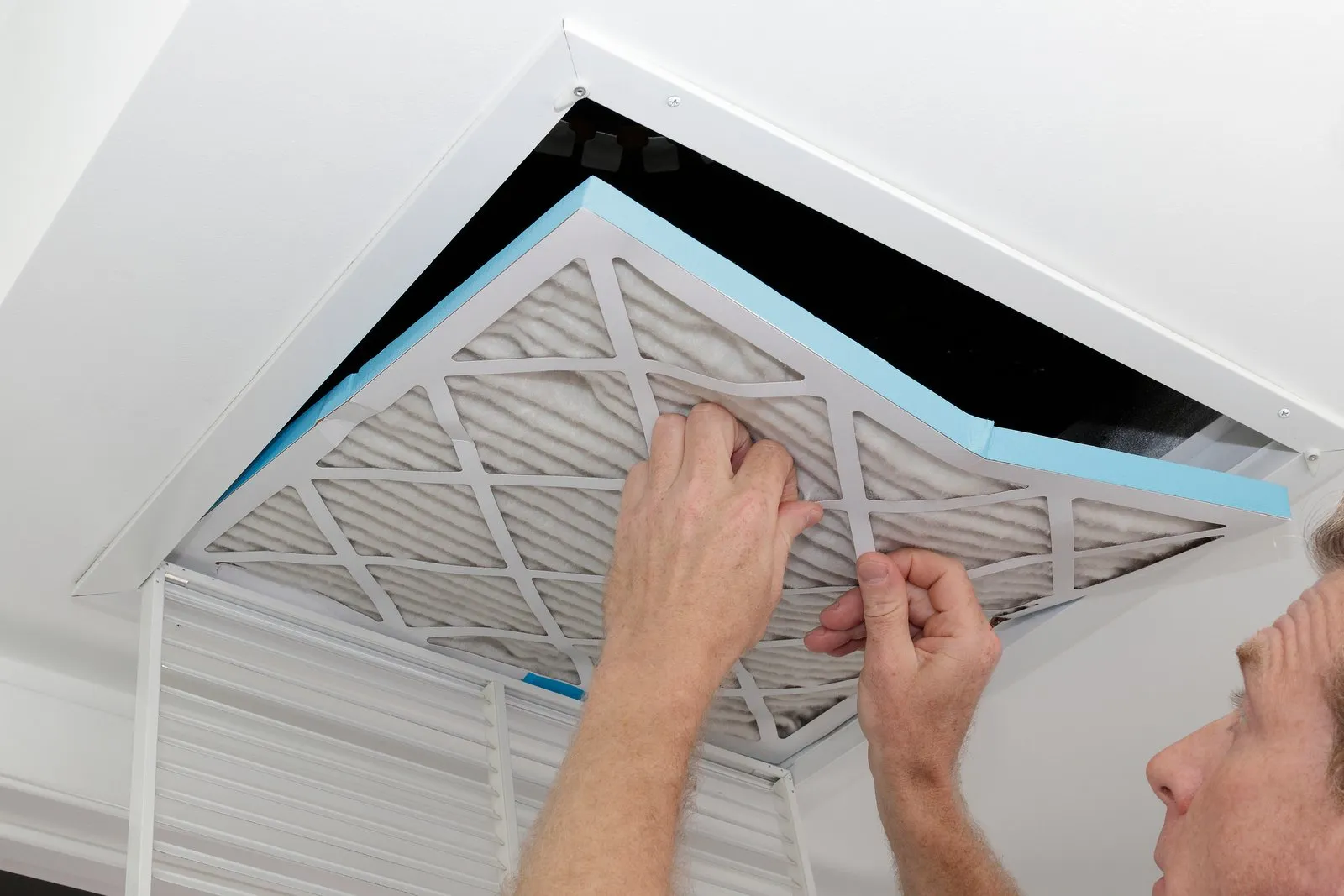
- Check the filter. Make sure it's the right size, seated without gaps and changed regularly. The EPA recommends the highest-efficiency filter your system's manufacturer allows.
- Check the register. If there's a visible gap between the register and the ceiling, the vent may be pulling in attic air. An HVAC contractor can seal it properly.
- Cut back on soot. Trim candle wicks, burn incense less often and run the range hood when cooking.
- Clean the marks. Remove the register cover and wash it. Clean the ceiling gently with a method suited to your paint. Repainting with a scrubbable finish can help if the stain doesn't come out.
Then watch for a few weeks. If the marks come back slowly, you're seeing normal deposits. If they come back quickly and heavily, look deeper.
When the ducts are part of the answer
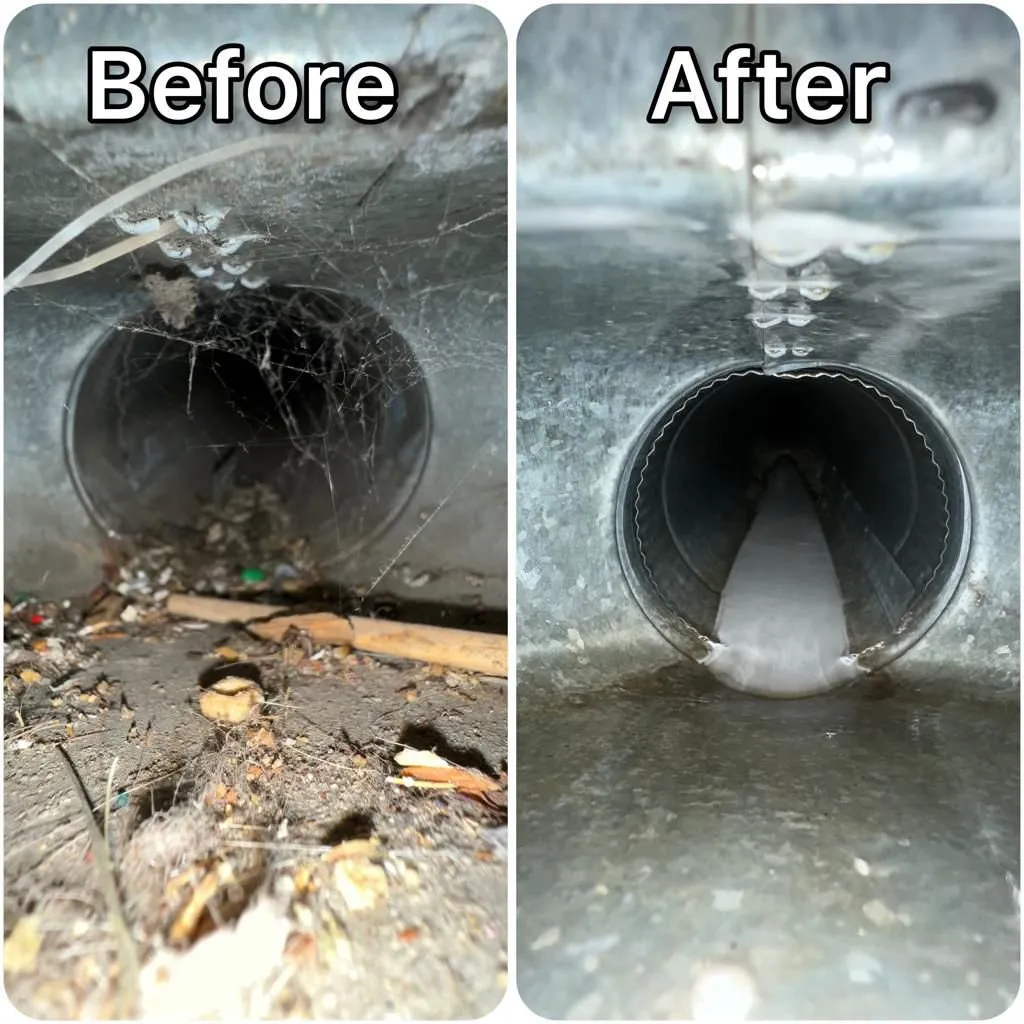
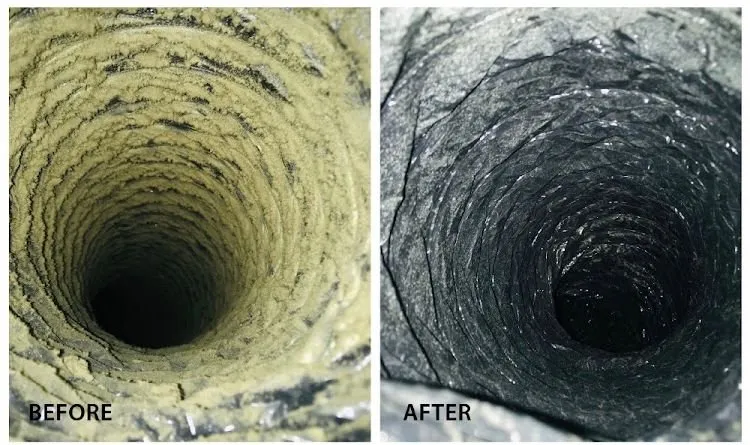
If you lift a register and see heavy buildup inside the duct, or you notice dust actually puffing out when the system starts, the ductwork may be contributing. The EPA lists particles being released from supply registers as one of the situations where duct cleaning should be considered.
Our air duct cleaning covers the supply and return ducts and the registers, using rotating brushes and a HEPA-filtered vacuum. It's $199 for a system with up to 10 vents and $29 per extra vent. If one or two vents are the problem, deep duct cleaning at $59.99 per vent may be the better fit. We'll be honest: if the source is a gap at the register or a leaky return, cleaning alone won't stop the marks. Those leaks need an HVAC contractor. You can compare all services on our pricing page.
We also serve communities around Houston; see our service areas.
If the marks around your vents keep coming back, request a free estimate from Air Cleaning Specialists Inc.
Sources
- Should You Have the Air Ducts in Your Home Cleaned?, U.S. EPA, last updated February 19, 2026
- Air Seal and Repair Ducts, Building America Solution Center (PNNL, U.S. DOE), last updated September 11, 2025